
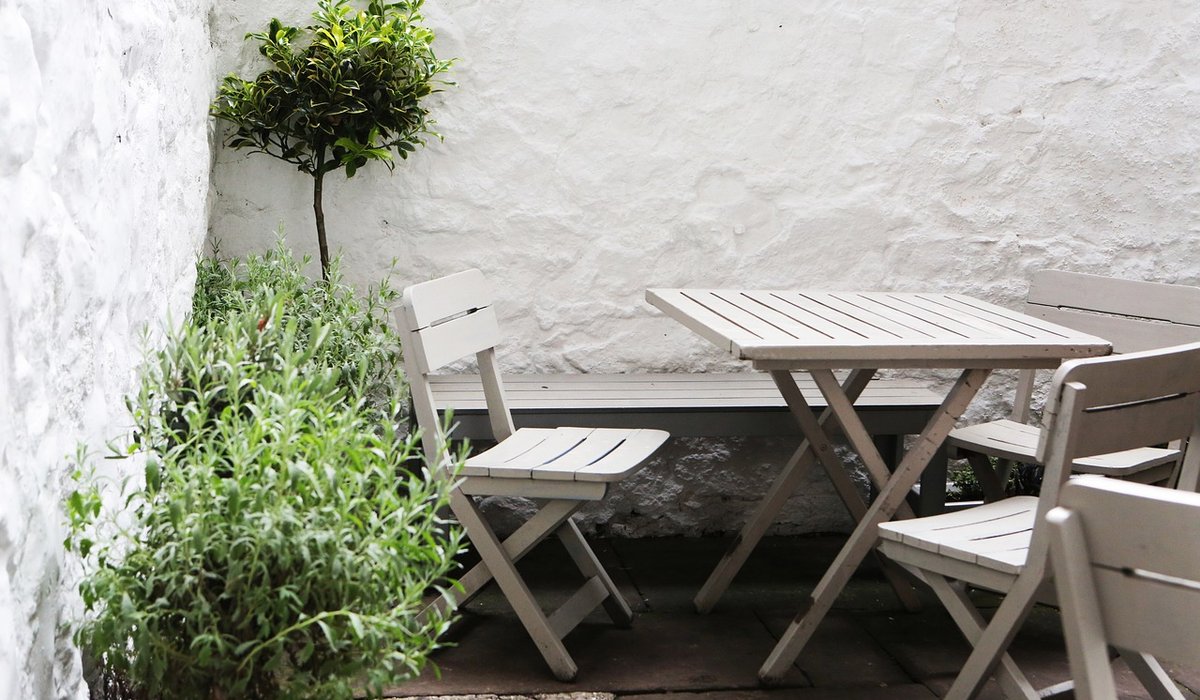
Designing a Low-Maintenance Courtyard with Evergreen Structure
Start with the space, not the plants
A courtyard is a room without a roof, and it behaves like one. Before you buy a single shrub, spend half an hour noting what actually happens out there. Which walls catch the morning sun, where the rain drips off a gutter, which corner stays damp and dark until June. Most UK courtyards are north-facing or hemmed in by fencing, which means the light you have is precious and the soil, if there is any, is often thin, dry and full of builder's rubble.
That constraint is not a problem, it is a brief. Shade and shelter suit evergreens beautifully. A courtyard also has the great advantage of being small enough to plant in containers, which means you control the compost, the drainage and the watering rather than fighting what is already there. Measure the footprint, decide where you want to sit, and leave a generous clear space for a table and two chairs. Planting right up to the patio doors looks wonderful in photographs and is miserable to live with.
Evergreens that earn their keep
Structure is what stops a small garden looking sad in February. You want a handful of plants that hold their shape for twelve months and need almost nothing from you. Choose three or four and repeat them, rather than collecting one of everything.
- Ilex crenata — looks like box, grows like a far more forgiving plant. It clips neatly into low balls or a loose hedge and shrugs off box blight.
- Pittosporum tenuifolium 'Tom Thumb' — deep purple-black foliage in a compact mound, excellent against a pale wall.
- Sarcococca confusa — for a dark corner. Glossy leaves, and tiny white flowers in midwinter that scent the whole courtyard.
- Fatsia japonica — big architectural leaves that give a small space a tropical feel. Happy in shade, tolerant of neglect.
- Trachelospermum jasminoides — an evergreen climber for softening a fence or a bare wall, with scented cream flowers in summer.
Keep them in shape with a light trim in late spring, once the risk of hard frost has passed. Never clip evergreens in autumn; the fresh cuts will sit through the winter and go brown.
Grasses for movement and light
Evergreens alone can look static and a little corporate. Grasses break up the solid forms, catch the low sun and rustle in the wind, which matters enormously in a space where you can hear everything.
- Anemanthele lessoniana — pheasant's tail grass. Evergreen in mild areas, with orange and copper tones through winter.
- Carex oshimensis 'Evergold' — a neat, striped evergreen sedge that works in shade and in pots.
- Hakonechloa macra — for the shadiest corner, where it forms a low cascading mound.
- Nassella tenuissima — fine, pale and endlessly mobile, but it needs sharp drainage and full sun.
Cut deciduous grasses back to a low dome in late February or early March, before new growth starts. Evergreen sedges just need the dead tips combed out with your fingers.
Pots that do the heavy lifting
In a courtyard, containers are the planting beds. Get them right and the garden does most of the work for you.
- Go bigger than feels sensible. A pot of at least 40–50cm across holds moisture, stays cooler at the roots and looks properly planted rather than perching.
- Choose frost-proof stoneware, glazed ceramic or lightweight composite. Terracotta is lovely but cracks in a hard winter unless it is genuinely frost-resistant.
- Raise pots onto feet. This keeps drainage holes clear and stops the base staining the paving.
- Plant in a loam-based compost with 20 per cent horticultural grit. It holds water without staying soggy, which is exactly what evergreens want.
- Finish with a 2cm gravel mulch. It suppresses weeds, slows evaporation and makes the whole arrangement look deliberate.
Group pots in odd numbers and vary the heights so the eye travels. A single tall evergreen, a mid-height grass and a low spreading plant make a reliable trio you can repeat around the space.
Watering and feeding with the least fuss
The honest truth is that containers need water, and in a hot spell that can mean once a day. Everything else in this article reduces that burden, but do not pretend it disappears. If you want the lowest possible workload, plant directly into a raised bed or a border with loam-based soil and mulch it heavily with bark or gravel. That alone can cut watering to once a week in all but the fiercest weather.
For pots, a simple drip line on a timer takes ten minutes to set up and saves you the whole summer's schlepping. Failing that, a rainwater butt beside a downpipe gives you soft water for free, and a few terracotta self-watering spikes pushed into larger containers will carry smaller plants through a long weekend.
Feed sparingly. A slow-release general fertiliser in spring is enough for shrubs and grasses; overfeeding produces soft, floppy growth that needs staking and looks worse, not better.
An annual hour of tidying
Set aside one morning in late spring and one in late winter and the courtyard will look after itself for the rest of the year. In spring, trim the evergreens lightly, top up the mulch, refresh the compost in the top few centimetres of each pot and give everything a slow-release feed. In late winter, cut back the deciduous grasses, remove any damaged leaves and check the pot feet and drainage holes.
Between those two sessions, all that is really required is a wander round with a watering can and a pair of secateurs. That is the quiet pleasure of a structure-led courtyard: it looks composed in every month, asks very little, and leaves you free to sit in it.
tag: Courtyard Design

Eleanor Bramley Author
Choose compact tomato varieties and learn how to support, feed and water them in pots for a reliable harvest on a warm patio.
YOU MAY ALSO LIKE

Growing Tomatoes in Containers on a Sunny Patio
Sep 1
10Plant nectar-rich flowers in pots and borders to welcome bees, butterflies and other pollinators, even in the smallest courtyard or balcony.
read more
Attracting Pollinators to a Small Urban Garden
Aug 29
10Compare terracotta, glazed and lightweight containers for courtyards, considering drainage, frost resistance and how they suit compact layouts.
read moreContainer Gardening
-

ERRIC CATONA
Grow fresh basil, thyme and rosemary indoors with the right light, compost and watering routine for year-round kitchen picking.
May 19, 2016 at 5.12 pm
Reply
ERRIC CATONA
Discover how to plant, tie in and prune climbing roses against a sheltered wall to encourage abundant blooms and healthy growth.
May 19, 2016 at 5.12 pm
Reply -
ERRIC CATONA
Use compact acers, moss, gravel and simple pruning to evoke a calm Japanese-inspired courtyard suited to small British gardens.
May 19, 2016 at 5.12 pm
Reply
Courtyard Design
Your email address will not be published.